Food & rail travel · ENGLISH EDITION
Ekiben is an edible map: choose the train lunch that tells your route
The Shinkansen doors close, the city slips behind the glass, and a small wrapper opens into a landscape: rice from one prefecture, fish from a nearby coast, vegetables seasoned to work at room temperature, compartments engineered to survive motion. Ekiben—eki for station, bentō for boxed meal—is not simply takeaway in miniature. Read it well and lunch becomes an edible map between two stops.

Choose the route before the famous box
Begin with the prefecture or station you are crossing. Look for 産, ‘produced in’, 名物, local specialty, and 限定, limited. A Tokyo counter may sell celebrated boxes from far away—and that can be delicious—but a lunch connected to your actual route gives you a clearer story of coastal fish, northern meat, mountain vegetables or regional rice.
Big stations gather dozens of regions; smaller ones may offer only a local handful. Do not assume a box from an old video is still waiting. JR East explicitly notes that assortments vary and stock can sell out. Plan around a flavour family—seafood, meat, vegetable or local mixed meal—rather than one trophy item.
The wrapper is part of the reading
JR East calls the illustrated sheet around a box kakegami. It may hold a railway map, landmark, festival, season or old-fashioned lettering. Before opening, photograph the front and identify three claims: the meal’s name, its place, and the image chosen to represent that place. It is advertising, but it is also compact cultural design.
Then test the promise against lunch. If the cover shows the sea, where do fish or seaweed appear? If it declares autumn, do chestnuts, mushrooms or a seasonal palette carry the idea? The link need not be literal. The question turns a souvenir surface into an argument about place.
Five label signals prevent bad surprises
Find 名称 for product name, 原材料名 for ingredients, アレルギー or 一部に…を含む for allergens, 消費期限 for the use-by limit, and 保存方法 for storage. Japan’s Consumer Affairs Agency says food sold domestically is labelled in Japanese. English on the front does not promise a translated back. Camera translation can orient you; it should not be the sole safety check for a serious allergy.
Also read heating instructions. A few ekiben warm themselves after a string is pulled, but use that mechanism only when the package says so and follow its timing and warnings. Do not dismantle the heating base or improvise with a microwave. Most ekiben are deliberately seasoned and packed to taste good cold.
Halal, vegetarian or allergen-free: evidence before appetite
A vegetable-looking box may use fish dashi; sauce can contain mirin or animal derivatives. Removing a visible piece does not verify the rest. Muslim travelers and anyone with an allergy should choose explicit trusted certification, ask staff with a picture of the ingredient, or download the Consumer Affairs Agency’s allergy communication sheet before the trip. When evidence is missing, call the result unconfirmed and move on.
JNTO points to some vegetarian choices at large stations, but also warns that gluten-free options are rare and soy sauce is common. Guidance is not a guarantee of today’s stock, recipe or cross-contact controls. Carry a verified backup when the requirement is medically or religiously strict; departure time is a poor moment for your only investigation.
Buy before boarding—and keep the platform in sight
JR Central’s current guide says there is no onboard food-and-drink service in Standard Class, so buy first. Give yourself fifteen or twenty minutes after reaching the station, but locate your gate and platform before studying every shelf. Shops may sit outside the ticket gates, inside them or on the platform. No lunch is worth missing the train.
JR Central Market also offers advance reservation for selected products and pickup points. When checked on 22 August 2026, its window ran from four to fifteen days ahead; locations, stock and terms can change. Reserve when one particular box matters. Otherwise, discovery five minutes before boarding is part of the pleasure.
Tray table means yes; packed commuter car means no
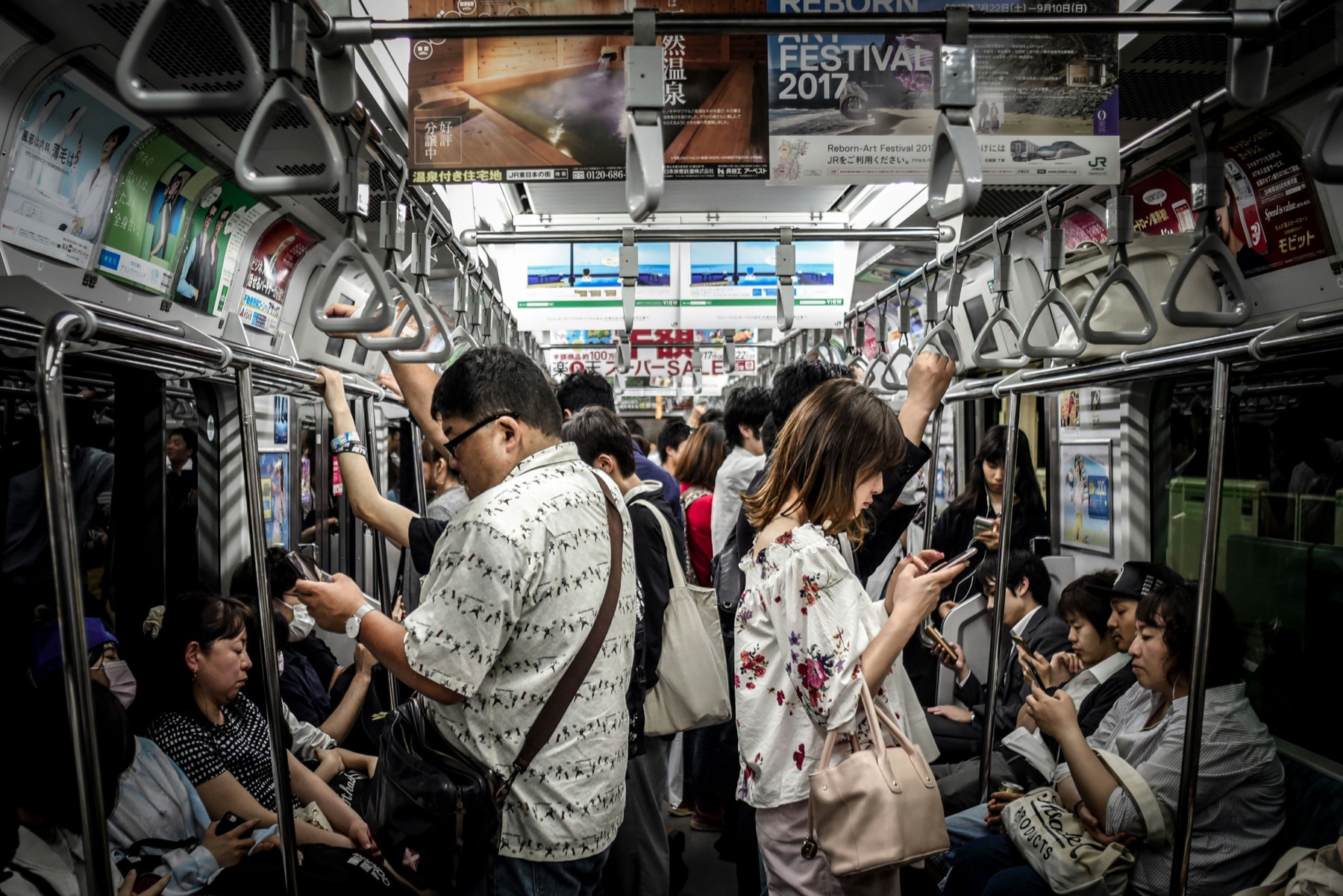
JNTO’s rule is wonderfully usable: long-distance Shinkansen and limited express trains are meal-friendly; local trains and subways are not. Even in the right carriage, sit before opening, keep aromas and elbows contained, and never turn the neighbouring seat or aisle into your pantry.
Nest lids, wrappers and chopsticks back inside the box and use an appropriate bin on the train or at the station; if there is none, carry everything away. Water or tea is easier than a spill-prone drink. Ekiben is engineered to serve a journey, and its best etiquette is leaving everyone else’s journey undisturbed.
The Japwa five-bite field test
Give bite one to the rice: plain, seasoned or stock-cooked? Bite two to the regional centrepiece. Bite three to a pickle or vegetable that resets the palate. Bite four to the surprise. Bite five should combine two neighbouring components. Finish one sentence: ‘This box says this region is…’ Understanding does not require loving every flavour.
Finally notice three quiet designers: the cook who chose food that survives cooling, the packer who kept it composed through motion, and the illustrator who compressed a prefecture onto paper. Ekiben then stops being a checklist snack. It becomes a lesson in how Japan turns distance into memory, a station into a table, and food into geography.
Japwa field note: buy from your route, not a fame list. Photograph the wrapper before opening, then record the place, ingredient and design detail you will remember.
Official sources
Official sources
- JNTO — Experience Japan’s local ekiben culture
- JR East — Ekiben Grand Prix: culture, craft and history
- JR Central — Shinkansen guide: eating and onboard sales
- JNTO — Traveling by rail: where eating is appropriate
- Consumer Affairs Agency — Food labelling and allergy communication sheets
- Consumer Affairs Agency — Current food-allergen labelling information
- JR Central Market — Ekiben advance reservation and pickup
- Wikimedia Commons — Ajay Suresh photograph and CC BY 2.0 licence