- Japwa checked the official sources on 18 October 2026; schedules and access rules can change
- Tokyo Camii lists daily general visiting hours of 10:00–18:00, with separate prayer-hall and Friday guidance
- Kyoto's official visitor guide lists limited mosque hours and advance arrangements outside them; do not assume all-day access
- Save the Japanese address, the official source and a realistic backup before leaving your hotel
01
The time-saving idea: one anchor, not ten pins
Choose a primary prayer stop that fits the day's route, then define a credible backup. An anchor is not merely the nearest map result. It is a place with an official page, an exact address, current access guidance and a contact method when the details are unclear. That turns the plan into “I will be near Okachimachi before noon and I have a verified address,” rather than “I will search when the time comes.”
Keep three different clocks separate: the prayer time, the congregation time and the office or visitor opening hours. A page may show today's timetable without promising that every facility is open continuously. A mosque may remain accessible to worshippers while its cultural centre, reception or shop closes. This is a logistics guide, not a religious ruling; ask a trusted scholar about combining or shortening prayers and any decision specific to your journey.
02
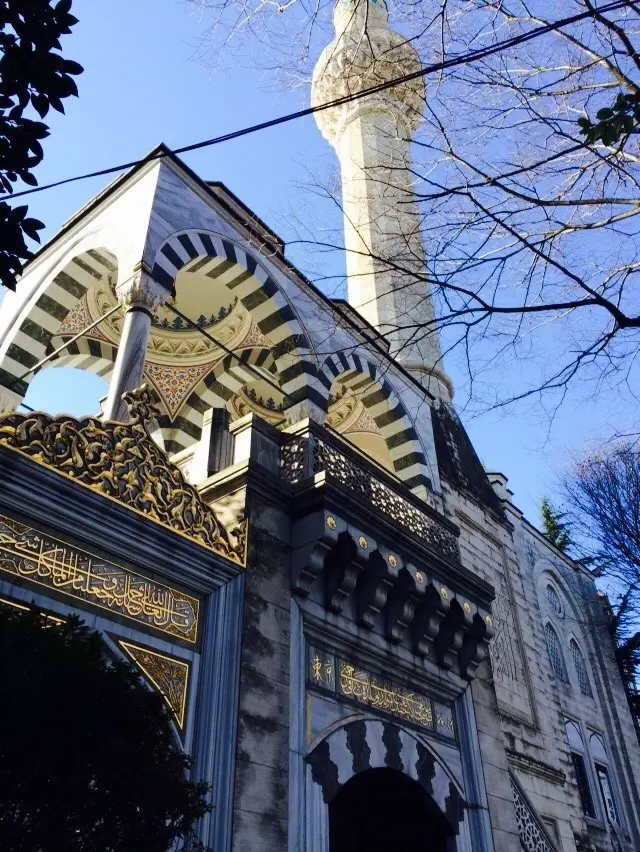
Tokyo: make Tokyo Camii the clear anchor
Tokyo Camii's official visitor page lists daily general visiting hours of 10:00–18:00. On Fridays, general visits for people not attending congregational worship begin at 14:00. Its FAQ adds that the first-floor cultural centre and halal market may close for roughly twenty minutes during congregational prayer, while another entrance serves the mosque. This is exactly why the facility's own page is more useful than copying a Maps opening-hours panel.
The prayer-hall rules ask everyone to dress modestly, remove shoes and remain quiet; women need a headscarf and use the upper floor. Carry a scarf and clean socks, and never photograph worshippers. Dedicated-camera, public or commercial filming requires prior permission, so a tourist snapshot policy is not a licence to reuse imagery.
For a day around Ueno and Ameyoko, the Assalaam Foundation building offers a geographically useful alternative rather than the same experience. Its official access page places it at 4-6-7 Taito, two minutes from Exit 3 of Naka-Okachimachi Station or three minutes from Okachimachi Station's north exit. The page publishes a changing daily schedule; open it that morning instead of saving one day's times for a future trip.
03
Kyoto: limited access hours reshape the route
Kyoto City's official visitor guide identifies Masjid Kyoto / Kyoto Mosque near the Imperial Palace. When checked on 18 October 2026, it listed mosque and office opening from Tuesday to Saturday, 12:00–18:00, closure on Sunday and advance arrangements for use outside those hours. This is not a detail to copy into a trip months away without checking again; keep the page and contact number with your itinerary.
The same page lists three Friday prayer slots—12:30, 13:00 and 13:30—and explicitly says they are available to men only. A woman should not infer an unlisted arrangement from that notice. Contact the Kyoto Muslim Association before the visit and ask specifically about the women's entrance and space on your date.
If the mosque timing does not fit, the official Kyoto guide lists conditional alternatives. It describes a small prayer room inside Kyoto International Community House during the facility's operating hours, and space at Nijo Castle upon request with a paid admission ticket. Treat these as facility services with their own rules, not as universally open public prayer rooms.
04
Osaka: an out-of-centre mosque needs a transport decision
Osaka Ibaraki Mosque's official site places it at 4-6-13 Toyokawa in Ibaraki City, Osaka Prefecture, with directions from Handai Byoin monorail station. It therefore makes more sense as the anchor for a north-Osaka day than as a late addition to a packed Namba or Universal Studios schedule. The word “Osaka” in the name does not place it beside every central attraction; check the actual journey before fixing the time.
The access page says on-site parking is limited and suggests a roughly ten-minute walk from larger Route 171 parking areas when full. It does not publish fixed opening hours that we can guarantee for every day. Use the official email or telephone to confirm women's access and the congregation time for your date, particularly if the detour is substantial.
05
The five-minute pre-departure check
Open the official source and save the access conditions, not only a prayer time. Copy the Japanese address into your notes, download a small offline map and aim to arrive fifteen to twenty minutes early. Pack a scarf, clean socks, a light shoe bag and tissues. Ask where ablution is permitted instead of assuming every building is arranged in the same way.
Name the backup: another verified mosque on your line, a facility whose official page explicitly offers prayer space, or a planned return to your accommodation if its rules allow. “I will find somewhere” is not a backup, and a room shown in an old post is not a guarantee. At a shop, museum or station, ask staff before using a space and respect ticket, time and access restrictions.
06
A route that is not ruled by the map
In Tokyo, build a morning around Meiji Jingu or Shimokitazawa and continue to Tokyo Camii after checking its visitor page and current prayer schedule. In Kyoto, pair the mosque with an Imperial Palace day only when the access hours align; otherwise use another officially listed facility and ask on arrival. In Osaka, combine Ibaraki Mosque with north Osaka rather than squeezing it into a short Dotonbori evening.
Before closing the hotel door, ask four questions: is the source official, did I check it today, does the journey truly fit my route, and what is the second option? Clear answers beat twenty saved pins. You need one verified address, enough time and the flexibility to respect both the place and your worship.
Japwa's rule: never carry an old screenshot of a prayer time or opening hours into a new day. Open the official source that morning, save the Japanese address and ask explicitly about women's space when the page is silent.